Prof. Chang Kee Jung Wins American Physical Society’s 2022 Julius Edgar Lilienfeld Prize
Chang Kee Jung distinguished professor, the chair of the Department of Physics and Astronomy at Stony Brook University, and a former co-spokesperson of T2K

Photo: Reidar Hahn, Fermilab
Dr. Sara Bolognesi won the EPS Emmy Noether Distinction for Women in Physics
Dr. Sara Bolognesi has been awarded the Summer 2021 Emmy Noether Distinction of the European Physical Society “For her development of the data analysis techniques that conclusively improved the sensitivity of the CERN-CMS experiment, thus allowing the discovery of the Higgs boson and the first measurement of its spin and parity.” Dr. Sara Bolognesi is member of the Institut de Recherche sur les lois Fondamentales de l’Univers – Institute of Research on the Fundamental laws of the Universe of the CEA (IRFU) – Commissariat aux Energies Atomiques et Alternatives (CEA), Saclay, France.
Dr. Sara Bolognesi joined the T2K experiment in 2013 making instrumental contributions that lead to the first indication of possible CP violation in leptons in 2020. Dr. Sara Bolognesi is now the physics coordinator of the experiment.
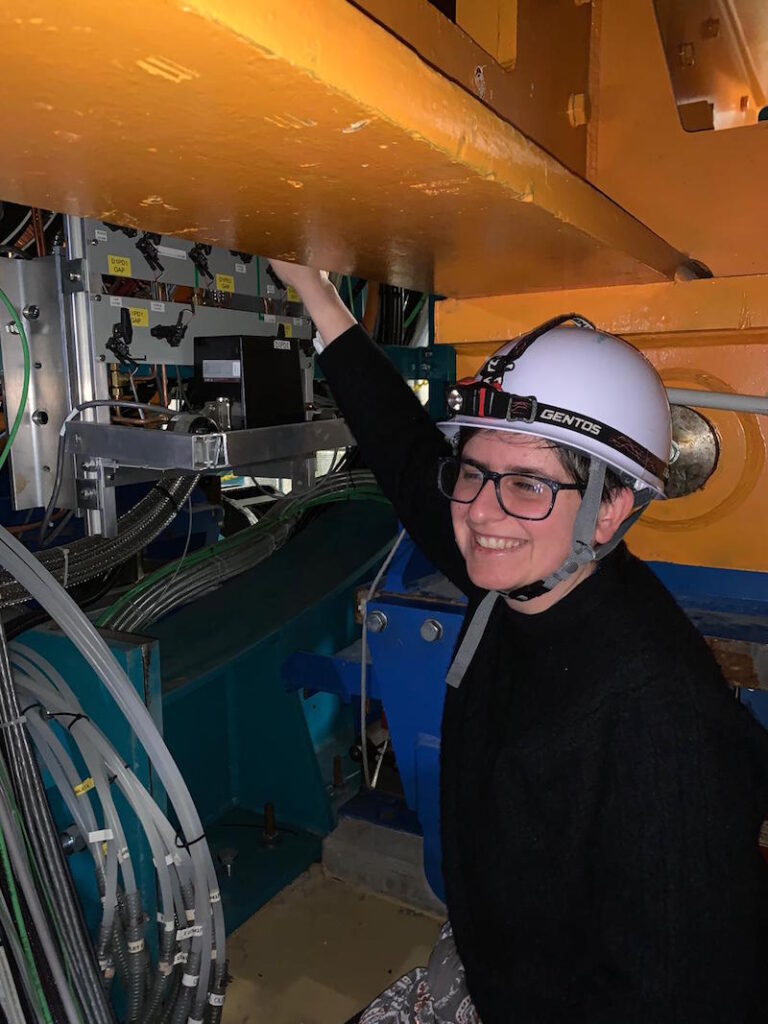
Prof Atsuko K. Ichikawa from Tohoku University re-elected Spokesperson of the T2K collaboration
Prof. Atsuko K. Ichikawa from Tohoku University was re-elected Spokesperson of the T2K collaboration for a second term.
Prof Federico Sanchez from the University of Geneva re-elected International Co-Spokesperson of the T2K collaboration
Prof Federico Sanchez from the University of Geneva has been re-elected International Co-Spokesperson of the T2K collaboration for a second term.
Dr. Chris J. Densham, innovator of neutrino production targets, wins the Institute of Physics Prize for Outstanding Professional Contributions
Dr. Chris J. Densham at Rutherford Appleton Laboratory, the United Kingdom, who has been designing and developing the neutrino production target, beam window, and other components at the J-PARC neutrino facility, wins the 2021 Institute of Physics Prize for Outstanding Professional Contributions to accelerator science and technology.
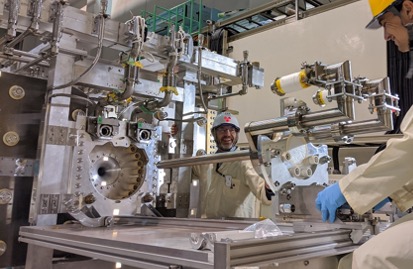
At high-energy accelerator facilities like J-PARC, a high-intensity proton beam from an accelerator strikes a target to produce particles such as neutrinos, muons, etc. The target is exposed to severe heating and pressure shock waves caused by beam bombardment, and further suffers degradation of materials due to radiation damage. Dr. Densham, as the leader of the high-power target group at Rutherford Appleton Laboratory, United Kingdom, organizes distinguished
Further success by his team on