T2K releases its first measurement of muon-antineutrino disappearance
T2K released its first measurement of muon-antineutrino disappearance in a seminar at the KEK High Energy Accelerator Research Organization on 18th May 2015. This result has been obtained from data taken from May 2014 – March 2015.
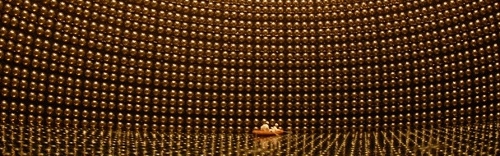
During this time, T2K has been running with a beam composed mostly of muon antineutrinos, and 59.8 events would have been expected in T2K’s far detector Super-Kamiokande if there were no antineutrino oscillations. However only 17 events were observed, which matches the expected “disappearance” due to muon antineutrinos oscillating into tau antineutrinos.
T2K also compared these new results with its earlier measurement of muon-neutrino disappearance, and found no difference between neutrinos and antineutrinos in these oscillations.
The graph below shows the T2K best-fit values and 68% and 90% credible intervals in the antineutrino oscillation parameters sin2θ23 and Δm232. The first of these parameters is a measure of the fraction of antineutrinos that oscillates, while the second is a measure of the difference between the squares of the masses of two types of antineutrino. T2K’s measurement of the antineutrino oscillation probability parameter sin2θ23 is the world’s best.
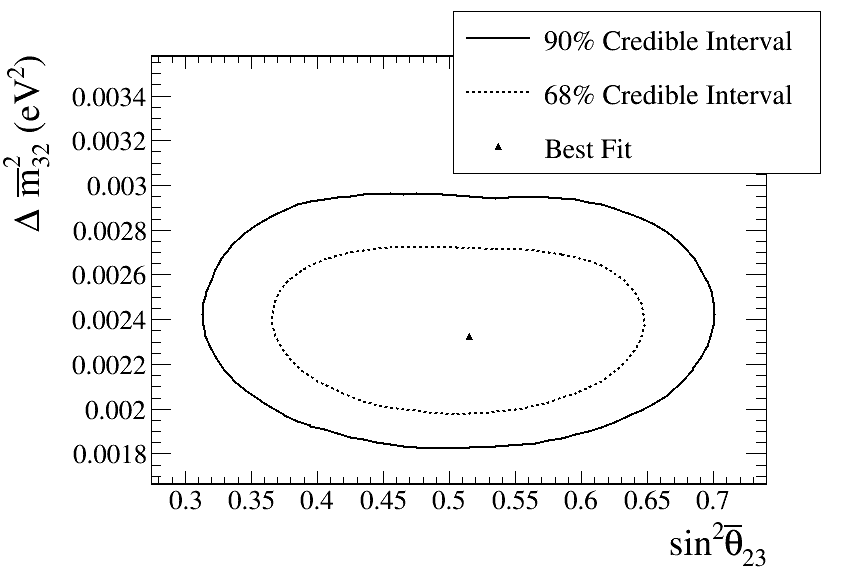
Best-fit values and 68% and 90% credible intervals in sin2θ23 and Δm232
J-PARC delivers 1×10²¹ protons on target to T2K
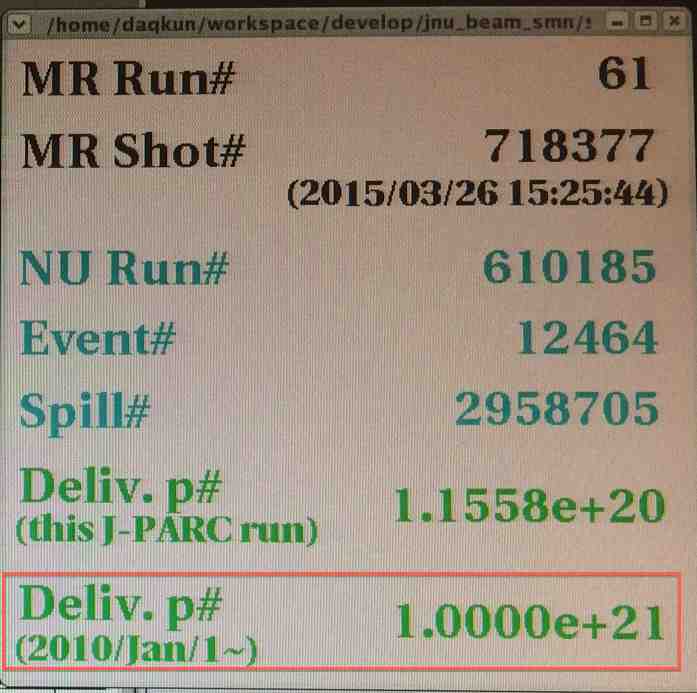
Information about J-PARC beam; the total number of protons on target delivered to T2K since January 2010 is shown in the bottom line.
Today (March 26, 2015) at 15:25 the J-PARC accelerator achieved the milestone of delivering 1×10²¹ protons on target to T2K. Many thanks are due to the J-PARC directorate and the staff members for their outstanding work to make this possible !
The protons are produced by J-PARC in Tokai on the east coast of Japan. They are made to collide with a graphite target, with one of the products of these collisions being charged pions. These pions pass through a series of three magnetic horns, which are able to preferentially focus either positively charged or negatively charged pions in the direction of T2K’s two detectors. Positively charged pions quickly decay to muon neutrinos and antimuons, while negatively charged pions decay to muon antineutrinos and muons. This means that T2K can choose whether its beam is composed mostly of muon neutrinos or mostly of muon antineutrinos by changing the direction of the magnetic horn current (the muons or antimuons and any remaining pions are stopped by a second layer of graphite at ~100m downstream of the target).
The number of protons on target delivered by J-PARC to T2K is a measure of how much data T2K has collected. T2K started taking physics data in January 2010, and collected data in neutrino beam mode until May 2014. Since that time, T2K has taken data in antineutrino beam mode. The figure of 1×10²¹ is the total number of protons on target delivered to T2K between January 2010 and today in both modes.
Takashi Kobayashi is awarded the Yomiuri Gold Medal
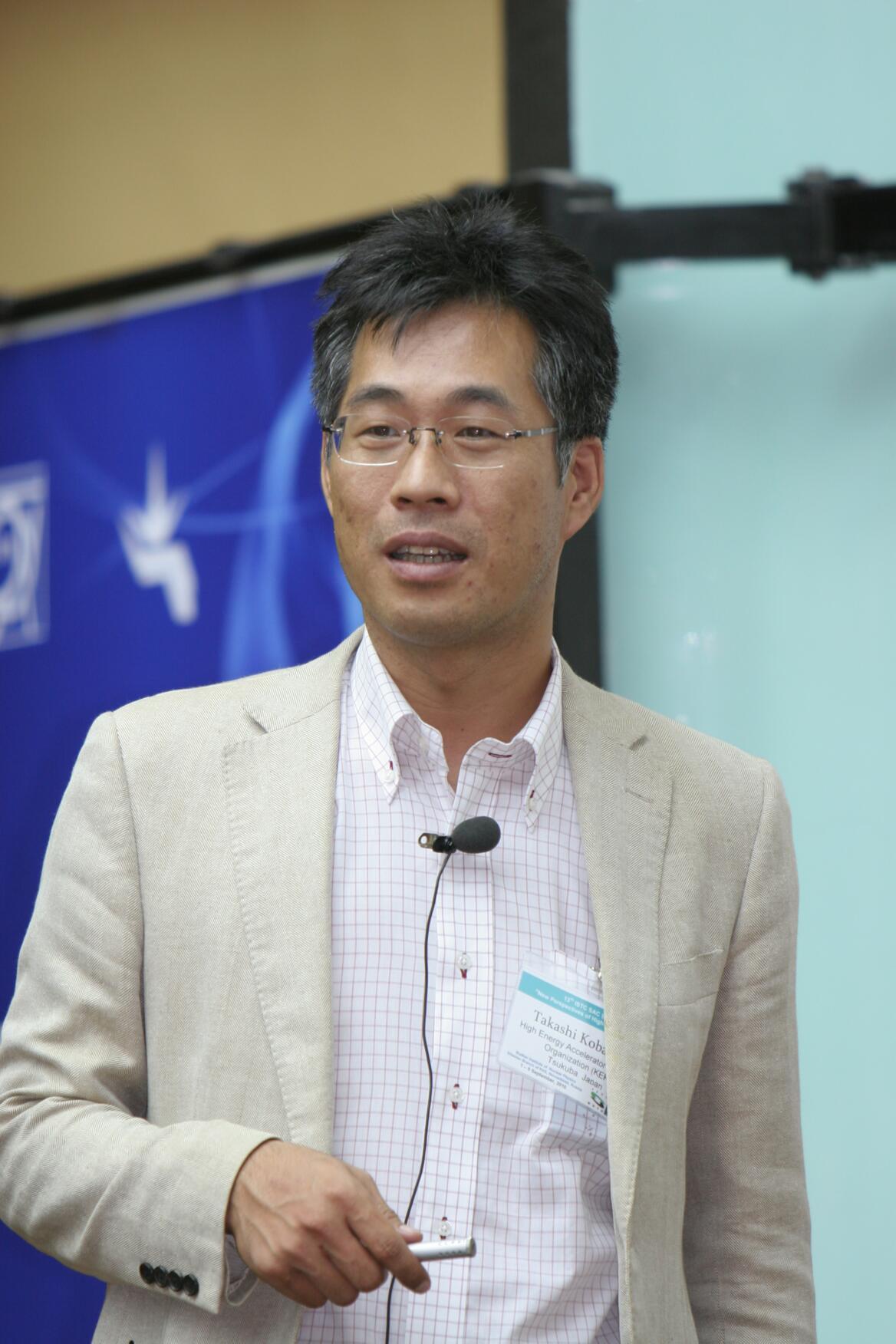
Takashi Kobayashi
Takashi Kobayashi has been awarded the Yomiuri Gold Medal for his contributions to the discovery of oscillations from muon neutrinos to electron neutrinos. He is a professor of physics at the High Energy Accelerator Research Organization (KEK) and is head of the Particle and Nuclear Physics Division at the Japan Proton Accelerator Research Complex (J-PARC).
The discovery of oscillations from muon neutrinos to electron neutrinos was announced by T2K in July 2013. T2K makes a beam of muon neutrinos in Tokai on the east coast of Japan, and sends it 295 km to its far detector Super-Kamiokande in western Japan. The announcement of the discovery was made following the observation of 28 candidate electron neutrino events in Super-Kamiokande.
The Yomiuri Gold Medal has been awarded annually since 1995. Each year, the medal is awarded to three researchers who have made outstanding contributions to research in science and technology. The award ceremony will be held on 16th April 2015 in the Yomiuri Shimbun building, Chiyoda Ward, Tokyo.
Congratulations Kobayashi-san !
Takashi Kobayashi, Tsuyoshi Nakaya and Masato Shiozawa are awarded the Yoji Totsuka prize
Takashi Kobayashi
Takashi Kobayashi, Tsuyoshi Nakaya and Masato Shiozawa have been awarded the Yoji Totsuka Prize for their contributions to discovering oscillations from muon neutrinos to electron neutrinos. Takashi Kobayashi is a professor of physics at the High Energy Accelerator Research Organization (KEK) and is head of the Particle and Nuclear Physics Division at the Japan Proton Accelerator Research Complex (J-PARC). Tsuyoshi Nakaya is a professor of physics at Kyoto University and is a Spokesperson for T2K. Masato Shiozawa is a professor of physics at the Institute for Cosmic Ray Research, University of Tokyo and is a member of the T2K Analysis Steering Group.
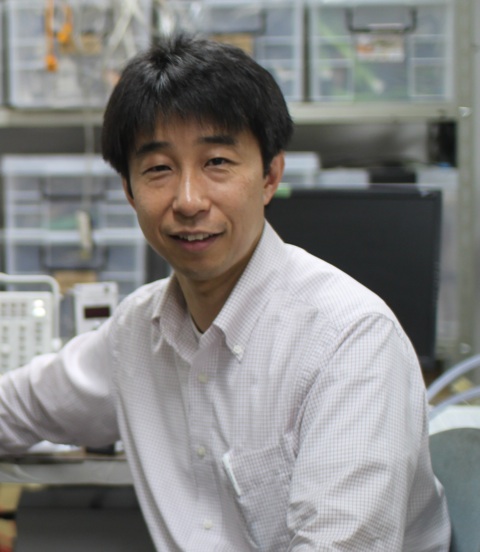
Tsuyoshi Nakaya
The discovery of oscillations from muon neutrinos to electron neutrinos was announced by T2K in July 2013. T2K makes a beam of muon neutrinos in Tokai on the east coast of Japan, and began to take physics data in January 2010. It sends the neutrino beam 295 km to its far detector Super-Kamiokande in western Japan. By the time of the announcement, 28 candidate electron neutrino events had been seen in Super-Kamiokande. This is an extremely important discovery as it is the first time that an explicit appearance of a unique flavor of neutrino at a detection point has been unequivocally observed from a different flavor of neutrino at its production point. This discovery also enables us to pursue a discovery of charge-parity violation in the lepton sector that may provide us with a critical key in our understanding of the matter-antimatter asymmetry in the universe, one of the most profound mysteries in science.
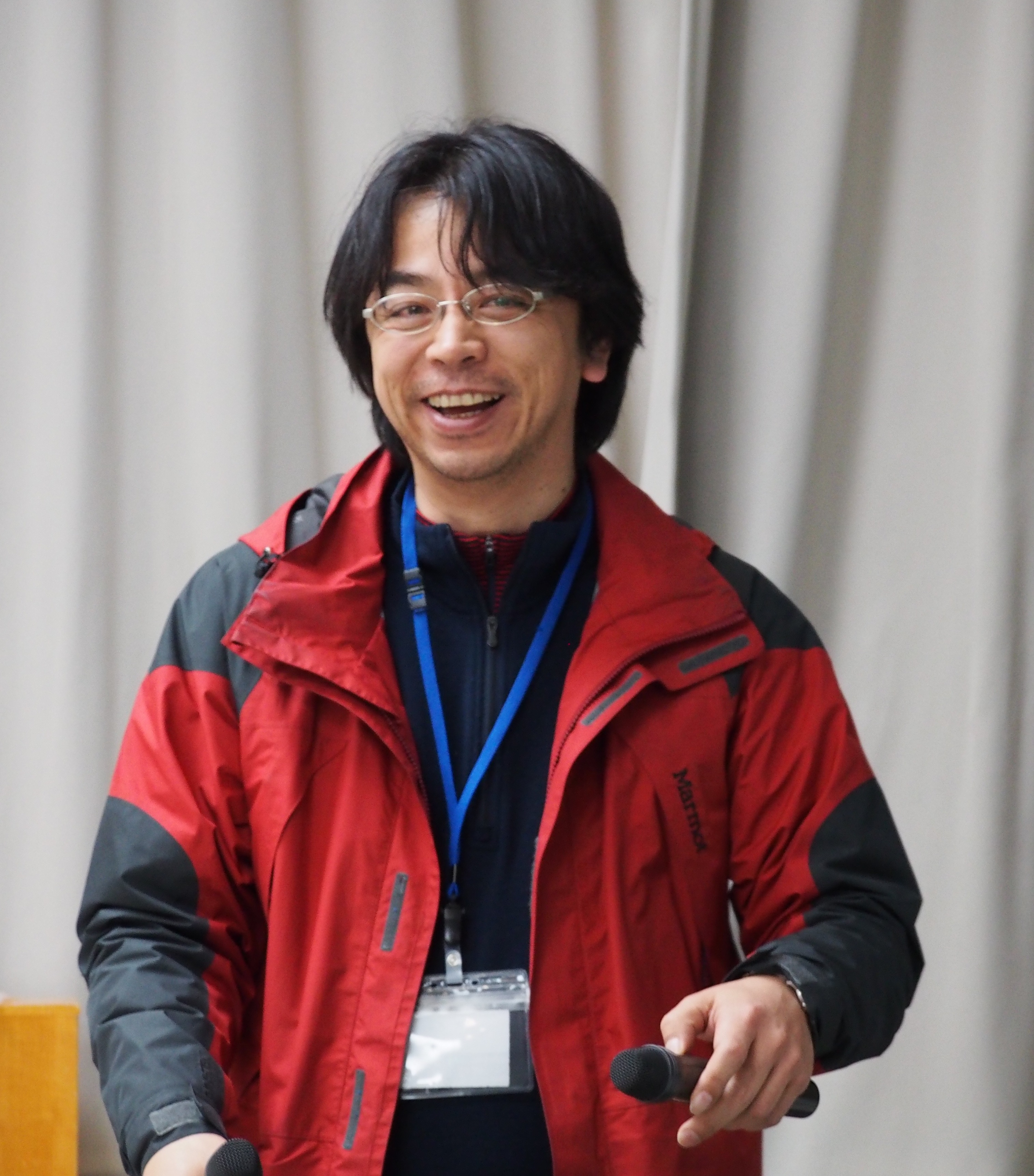
Masato Shiozawa
The Yoji Totsuka Prize is awarded annually to researchers who make outstanding contributions to advances in the fields of neutrino and non-accelerator physics. It was established in 2009 to commemorate Professor Yoji Totsuka’s distinguished achievements in neutrino physics, including the discovery of neutrino oscillations in solar and atmospheric neutrinos.
Congratulations Kobayashi-san, Nakaya-san and Shiozawa-san !
Takashi Kobayashi and Tsuyoshi Nakaya are awarded the Nishina Memorial Prize
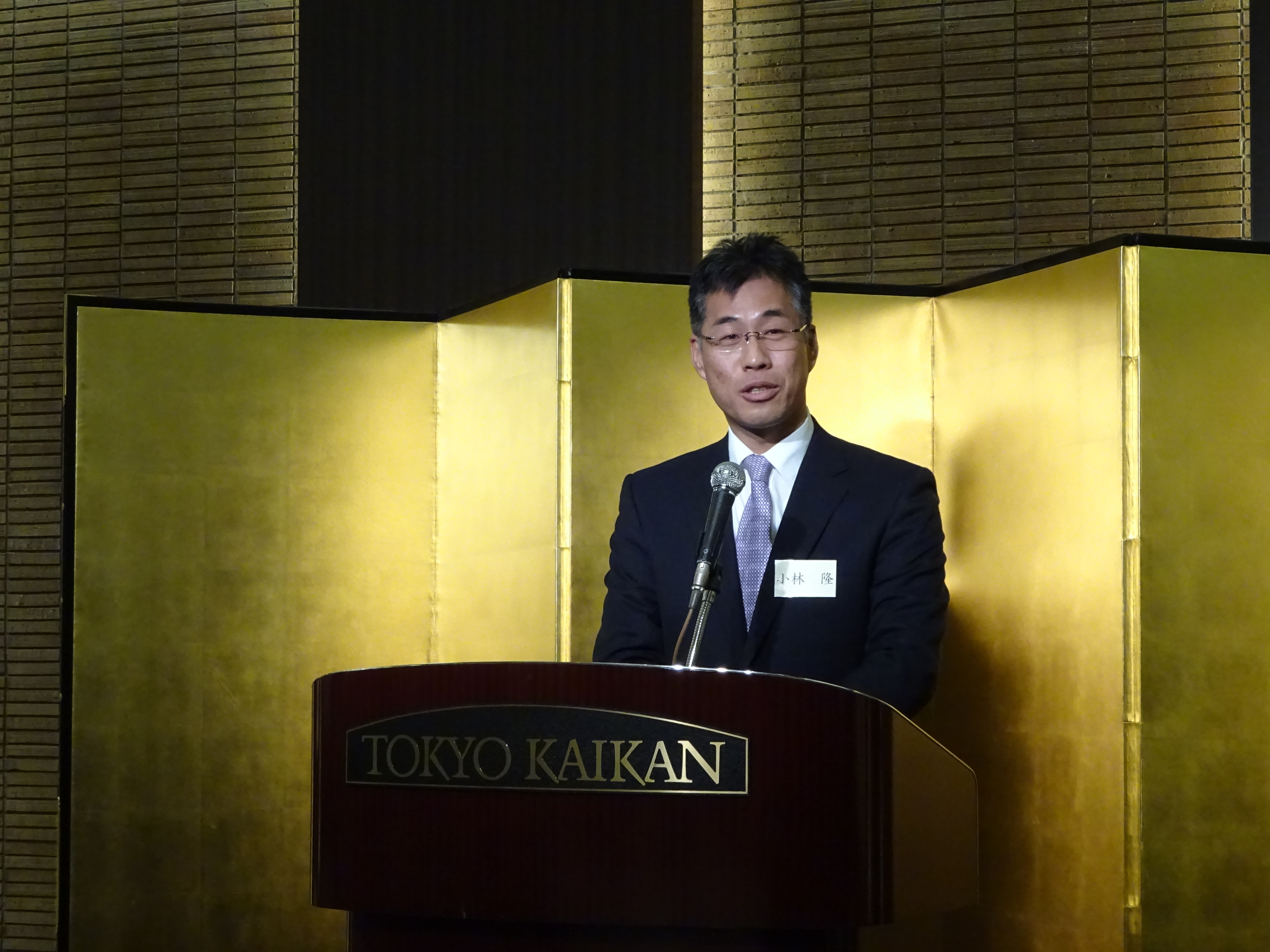
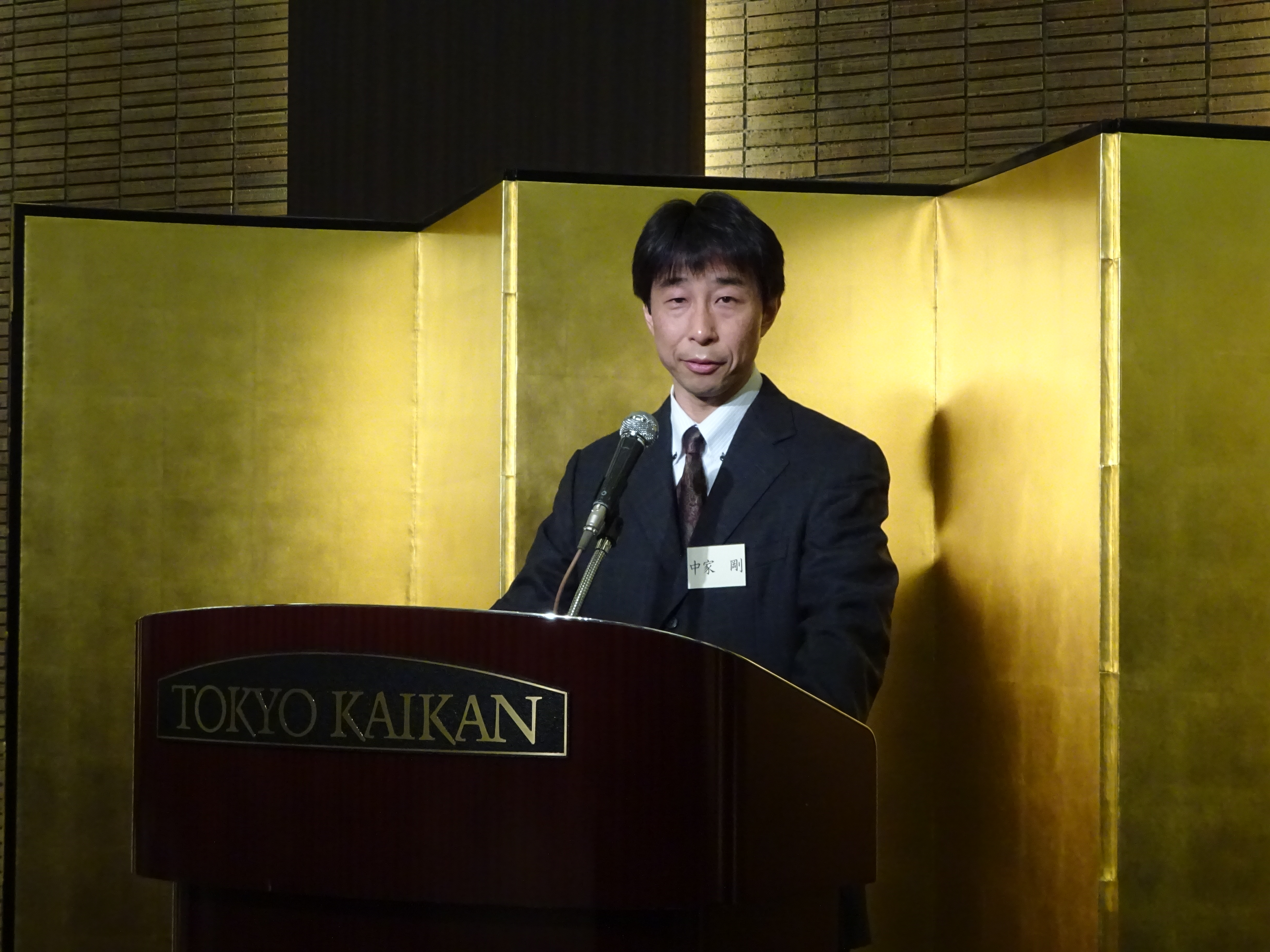
Takashi Kobayashi speaking at the award ceremony
Takashi Kobayashi and Tsuyoshi Nakaya have been awarded the Nishina Memorial Prize for 2014 for their contributions to discovering oscillations from muon neutrinos to electron neutrinos. Takashi Kobayashi is a professor of physics at the High Energy Accelerator Research Organization (KEK) and is a Spokesperson for T2K. Tsuyoshi Nakaya is a professor of physics at Kyoto University and was the Analysis Coordinator for T2K from 2009-2013. The award ceremony was held at the Tokyo Kaikan.
Tsuyoshi Nakaya speaking at the award ceremony
The discovery of oscillations from muon neutrinos to electron neutrinos was announced by T2K in July 2013. T2K makes a beam of muon neutrinos in Tokai on the east coast of Japan, and sends it 295 km to its far detector Super-Kamiokande in western Japan. The announcement was made following the finding of 28 candidate electron neutrino events in Super-Kamiokande. This is an extremely important discovery as it is the first time that an explicit appearance of a unique flavor of neutrino at a detection point has been unequivocally observed from a different flavor of neutrino at its production point. This discovery also enables us to pursue a discovery of charge-parity violation in the lepton sector that may provide us with a critical key in our understanding of the matter-antimatter asymmetry in the universe, one of the most profound mysteries in science.
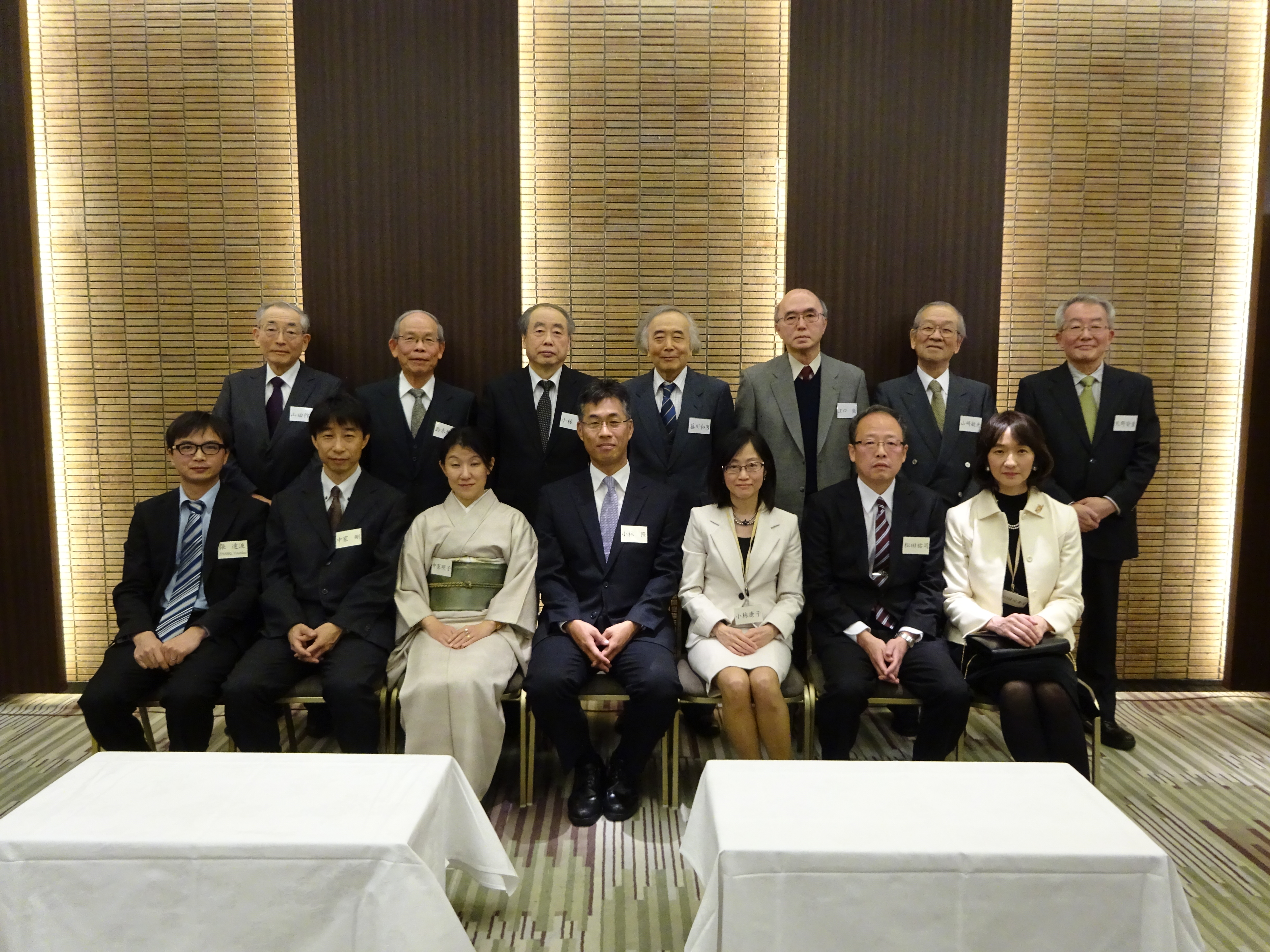
Nishina Memorial Prize award ceremony
The Nishina Memorial prize is awarded annually to young physicists for their achievements in the field of atomic and subatomic physics. It commemorates the eminent Japanese physicist Yoshio Nishina (1890-1951) who discovered the uranium-237 isotope and co-authored the Klein-Nishina formula giving the cross section of photons scattered from a single free electron.
Congratulations Kobayashi-san and Nakaya-san !
New results from T2K conclusively show muon neutrinos transform to electron neutrinos
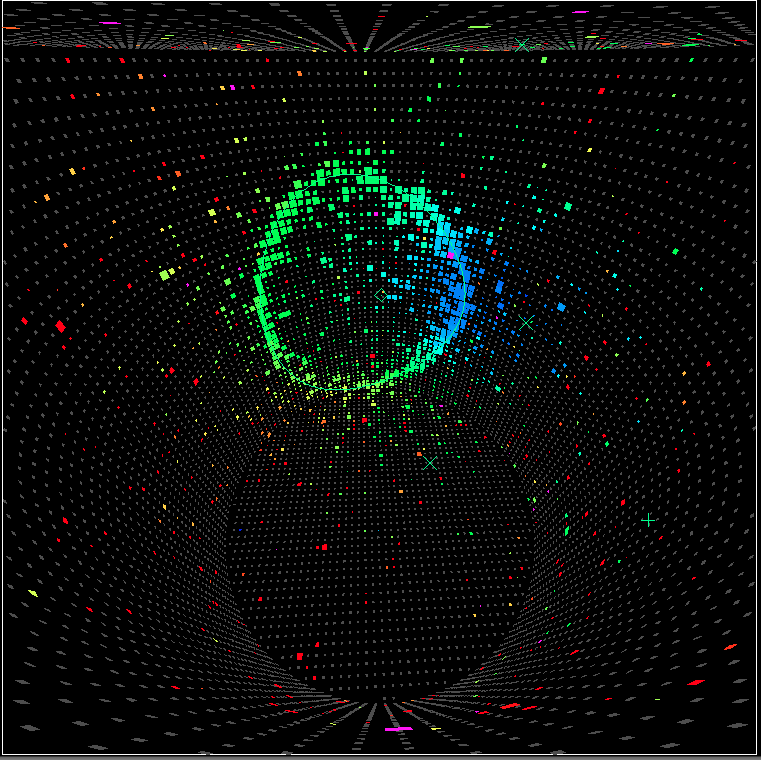
Electron-neutrino candidate in Super Kamiokande
Today at the European Physical Society meeting in Stockholm, the international T2K collaboration announced a definitive observation of muon neutrino to electron neutrino transformation. In 2011, the collaboration announced the first indication of this process, which was then a new type of neutrino oscillation; now, with 3.5 times more data, this transformation is firmly established. The probability that random statistical fluctuations alone would produce the observed excess of electron neutrinos is less than one in a trillion. Equivalently, the new results exclude such a possibility at the 7.5 sigma level of significance. This T2K observation is the first of its kind in that an explicit appearance of a unique flavor of neutrino at a detection point is unequivocally observed from a different flavor of neutrino at its production point.
In the T2K experiment in Japan, a muon-neutrino beam is produced at the Japan Proton Accelerator Research Complex (J-PARC), located in Tokai village, Ibaraki prefecture, on the east coast of Japan. The neutrino beam is monitored by a detector complex in Tokai and aimed at the gigantic Super-Kamiokande underground detector in Kamioka, near the west coast of Japan, 295 km (185 miles) away from Tokai. An analysis of the data from the Super-Kamiokande detector associated with the neutrino beam time from J-PARC reveals that there are more electron neutrinos (a total of 28 events) than would be expected (4.6 events) without this new process.
Neutrino oscillation is a manifestation of a long-range quantum mechanical interference. Observation of this new type of neutrino oscillation leads the way to new studies of charge-parity (CP) violation which provides a distinction between physical processes involving matter and antimatter. This phenomenon has only been observed in quarks (for which Nobel prizes were awarded in 1980 and 2008). CP violation in neutrinos in the very early universe may be the reason that the observable universe today is dominated by matter and no significant antimatter, which is one of the most profound mysteries in science. Now with T2K firmly establishing this form of neutrino oscillation that is sensitive to CP violation, a search for CP violation in neutrinos becomes a major scientific quest in the coming years, and T2K will continue to play a leading role. The T2K experiment expects to collect 10 times more data in the near future, including data with an antineutrino beam for studies of CP violation in neutrinos.
The T2K experiment was constructed and is operated by an international collaboration. The current T2K collaboration consists of over 400 physicists from 59 institutions in 11 countries [Canada, France, Germany, Italy, Japan, Poland, Russia, Switzerland, Spain, UK and US]. The experiment is primarily supported by the Japanese Ministry of Education, Culture, Sports, Science and Technology (MEXT). Additional support is provided by the following funding agencies from participating countries: NSERC, NRC and CFI, Canada; CEA and CNRS/IN2P3, France; DFG, Germany; INFN, Italy; Ministry of Science and Higher Education, Poland; RAS, RFBR and the Ministry of Education and Science of the Russian Federation; MICINN and CPAN, Spain; SNSF and SER, Switzerland; STFC, U.K.; DOE, U.S.A.
This discovery was made possible with the unyielding and tireless effort by the J-PARC staff members and the management to deliver high-quality beam to T2K after the devastating March 2011 earthquake in eastern Japan which caused severe damage to the accelerator complex at J-PARC, and abruptly discontinued the data-taking run of the T2K experiment.
More detailed information on this announcement including some images can be found at http://t2k-experiment.org/supporting-material-for-t2k-press-release-19-7-2013 .
This announcement is also available in Japanese at http://www.kek.jp/ja/NewsRoom/Release/20130719210000/ .
Media Contacts for Further Inquiries:
Globally and in Japan:
Prof. Takashi Kobayashi, Spokesperson, T2K Collaboration, The Institute of Particle and Nuclear Studies, KEK (Tsukuba, Japan), takashi.kobayashi@kek.jp
Phone: +81 90-9840-2413 (c), +81 29-864-5414 (o), +81 29-852-4881 (h)
Globally and in U.S.:
Prof. Chang Kee Jung, International Co-Spokesperson, T2K Collaboration, State University of New York at Stony Brook (Stony Brook, NY, USA) and Kavli IPMU, University of Tokyo (Kashiwa, Japan), chang.jung@stonybrook.edu
Phone: +1 631-707-2018 (c), +1 631-632-8108/8095 (o), +1 631-474-4563 (h)
In Canada:
Prof. Hiro Tanaka, University of British Columbia (Vancouver, Canada), tanaka@phas.ubc.ca
Phone: +1 778-772-3690
In France:
Dr. Jacques Dumarchez, LPNHE-Paris (IN2P3) (Paris, France), jacques.dumarchez@cern.ch
Phone: +33 1 44 27 48 42
Dr. Marco Zito, CEA/IRFU (Saclay, France), marco.zito@cea.fr
Phone: +33 6 84 61 09 51
In Germany:
Prof. Achim Stahl, RWTH Aachen University (Aachen, Germany), stahl@physik.rwth-aachen.de
Phone: +49 241 80 27301 (o), +49 172 5761500 (c)
In Italy:
Dr. Maria Gabriella Catanesi, INFN Sezione di Bari (Bari, Italy), gabriella.catanesi@cern.ch
Phone: +41 764871532
In Poland:
Prof. Ewa Rondio, NCBJ, Warsaw (Warsaw, Poland), Ewa.Rondio@fuw.edu.pl
Phone: +48 691 150 052
In Russia:
Prof. Yuri Kudenko, INR (Moscow, Russia), kudenko@inr.ru
Phone: +7-903-6159125 (c), +7-495-8510184 (o)
In Spain:
Prof. Federico Sanchez, IFAE, Barcelona (Barcelona, Spain), fsanchez@ifae.es
Phone: +34 93 5812835
Prof. Anselmo Cervera, IFIC, Valencia (Valencia, Spain), anselmo.cervera@cern.ch
In Switzerland:
Prof. Andre Rubbia, ETHZ (Zurich, Switzerland), andre.rubbia@cern.ch
Phone: +41 44 633 3873
In Suisse Romande:
Prof. Alain Blondel, Université de Genève, alain.blondel@unige.ch
Phone: +41 76 487 4058
In U.K.:
Prof. Dave Wark, STFC/RAL/Daresbury Laboratory/Oxford University (Oxford, U.K.), david.wark@stfc.ac.uk
Phone: +44 7788186085
T2K receives a prize from a French science magazine
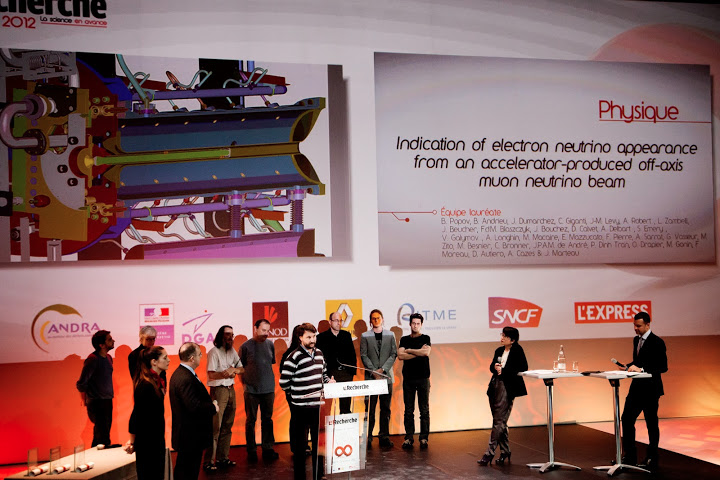
T2K collaborators receiving Le Prix La Recherche
T2K has been awarded a prestigious prize by La Recherche, a French science magazine. This prize is called “Le Prix La Recherche” and has 12 categories including biology, chemistry, mathematics and medicine. T2K received the physics prize for finding the first indications of oscillations from muon neutrinos to electron neutrinos. Some T2K collaborators can be seen in the photo receiving the award at the Musée du Quai Branly in Paris on 23rd October 2012. The certificate for the prize is shown below.
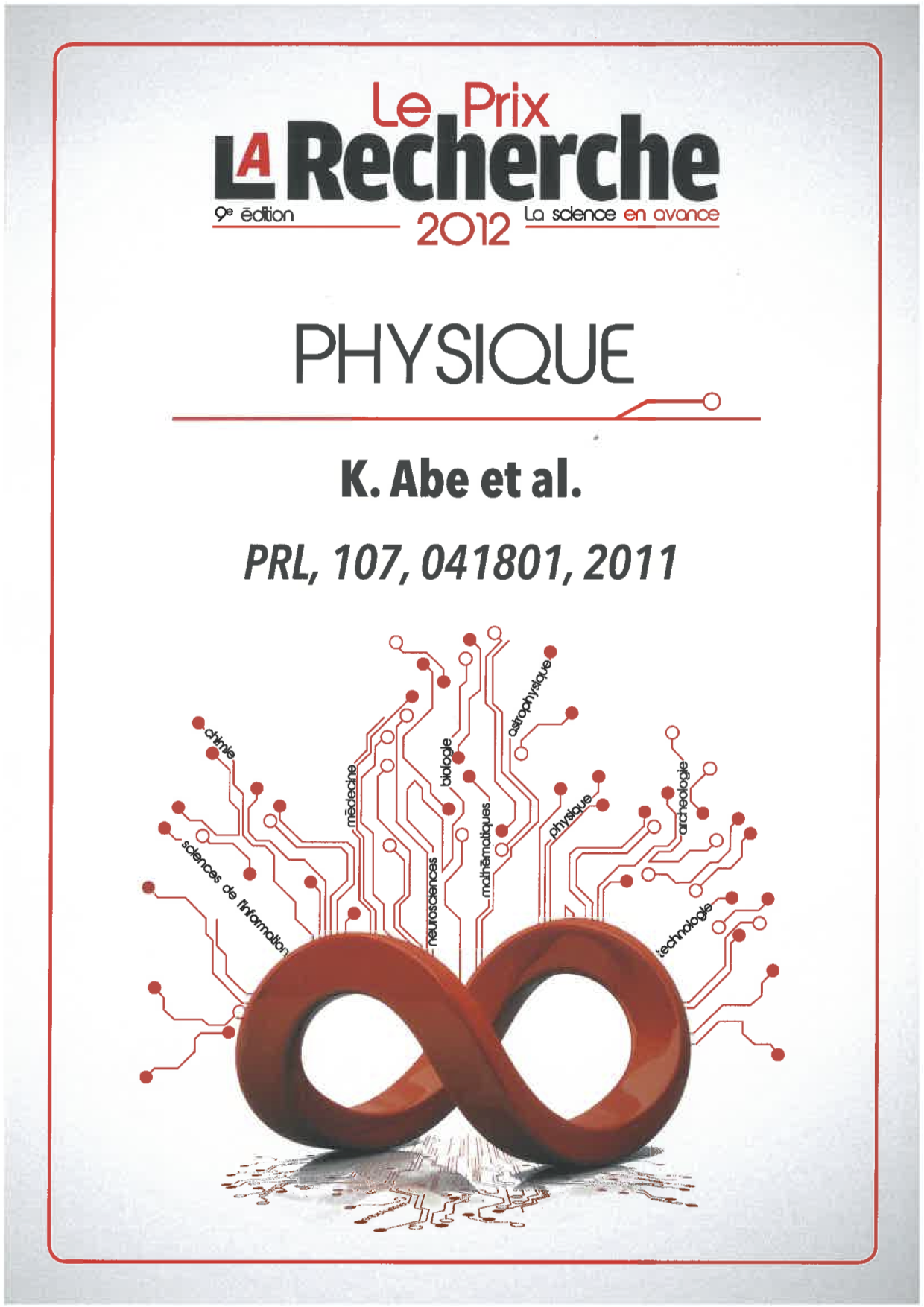
Le Prix La Recherche certificate
T2K updates its electron-neutrino appearance result using its full dataset obtained by summer 2012
The T2K collaboration presented new results on oscillations from muon neutrinos to electron neutrinos at the 2012 International Conference on High Energy Physics in Melbourne, Australia. These oscillations are predicted by quantum physics if neutrinos have non-zero masses. The new results were obtained with more than twice as much data as the T2K paper published in Physical Review Letters in 2011, which announced the first experimental indications for these oscillations.
In Melbourne T2K reported that 11 electron-neutrino events were seen in its far detector Super-Kamiokande, whereas only 3.2 would be expected if there were no oscillations. The probability of these 11 events being due to statistical fluctuations in processes other than oscillations from muon to electron neutrinos is small at 0.08%.
Three separate analyses were made of the T2K data, and gave results that were consistent with each other. The oscillation parameter sin2(2θ13) was measured to be 0.094+0.053-0.040 assuming standard values of related quantities. This parameter represents approximately the fraction of muon neutrinos that oscillate to electron neutrinos when the muon neutrinos have energies of 6 x 10⁸ electron-volts in T2K (one electron-volt is the energy acquired by an electron when it is accelerated in an electric field of one volt).
More details of this result are available on the For Physicists page, and the presentation given at the Melbourne conference is here.
First T2K beam neutrino event in Super-Kamiokande since March 2011 earthquake
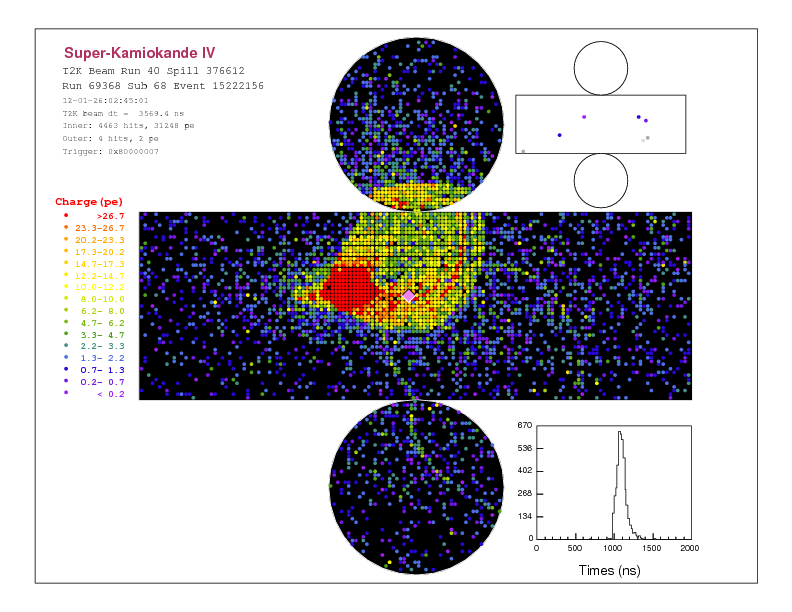
First event in Super-Kamiokande since earthquake
The first T2K beam neutrino event since the earthquake of March 2011 was seen in Super-Kamiokande (T2K’s far detector) on 26th Janaury 2012. It is shown in the event display above, and has a Cherenkov ring produced by a muon in the centre of the image. This muon was produced when a muon neutrino in the T2K beam interacted with a neutron or proton in an oxygen nucleus in the water of Super-Kamiokande. The detection of this event is another major step towards resumption of data taking by T2K, which is due to start in March 2012.
We would like to thank Kamioka Observatory, Institute for Cosmic Ray Research, University of Tokyo for supplying the event display.
T2K publishes first off-axis measurement of muon-neutrino disappearance
T2K has published the first measurement of muon-neutrino disappearance by an off-axis experiment in Physical Review D at http://prd.aps.org/abstract/PRD/v85/i3/e031103.
The T2K beam is mostly composed of muon neutrinos, and 104 muon-neutrino events would have been expected in T2K’s far detector Super Kamiokande if there were no neutrino oscillations. However only 31 such events were observed, and it is believed that the deficit is due to oscillations from muon neutrinos to tau neutrinos. This result has been obtained from data taken from January 2010 – March 2011. Further details of this measurement are given in the list of T2K results, and the advantages of an off-axis experiment are explained on the About T2K page.